







Florian’s story was first published in French in June 2026.
Hi Florian, can you tell us a bit about yourself?
Hi! After a bachelor’s degree in history (I wanted to be a teacher), I didn’t know what to do next. I tried two different master’s degrees in history and dropped out of both very quickly. Then I spent a third year going from one casual job to the next. I went to see a careers adviser, but the appointment didn’t get me anywhere.
I wish careers advisers knew about working holidays. They could suggest them to people who aren’t sure about their future, like I was.
In the end, I started a master’s in communications, and that’s when I found out about working holidays. The company where I did my final internship offered me a job, but I turned it down. I went to New Zealand on a working holiday visa instead. It was such a rewarding experience that I decided to do a second one, this time in Japan.
Tell us a bit about your time in New Zealand and Japan.
I organised my time in both countries the same way. First, several months staying with locals through HelpX volunteering. Then, stretches of work with travel in between.
What made you want to stay in Japan after your working holiday, and how did you get your work visa?
To go from a working holiday visa to a work visa, I told my employer I wanted to stay on in Japan, and we sorted out the paperwork together so I could get the visa.
What’s day-to-day life like for a working holiday maker in Japan?
For me, life there was really pleasant and easy-going.
I was lucky: my employers (hotels and a dairy farm) gave me somewhere to live. The first one helped me with all the usual paperwork (opening a bank account, registering my address at the local council, and so on). And once I had a Japanese girlfriend, things got a lot easier!
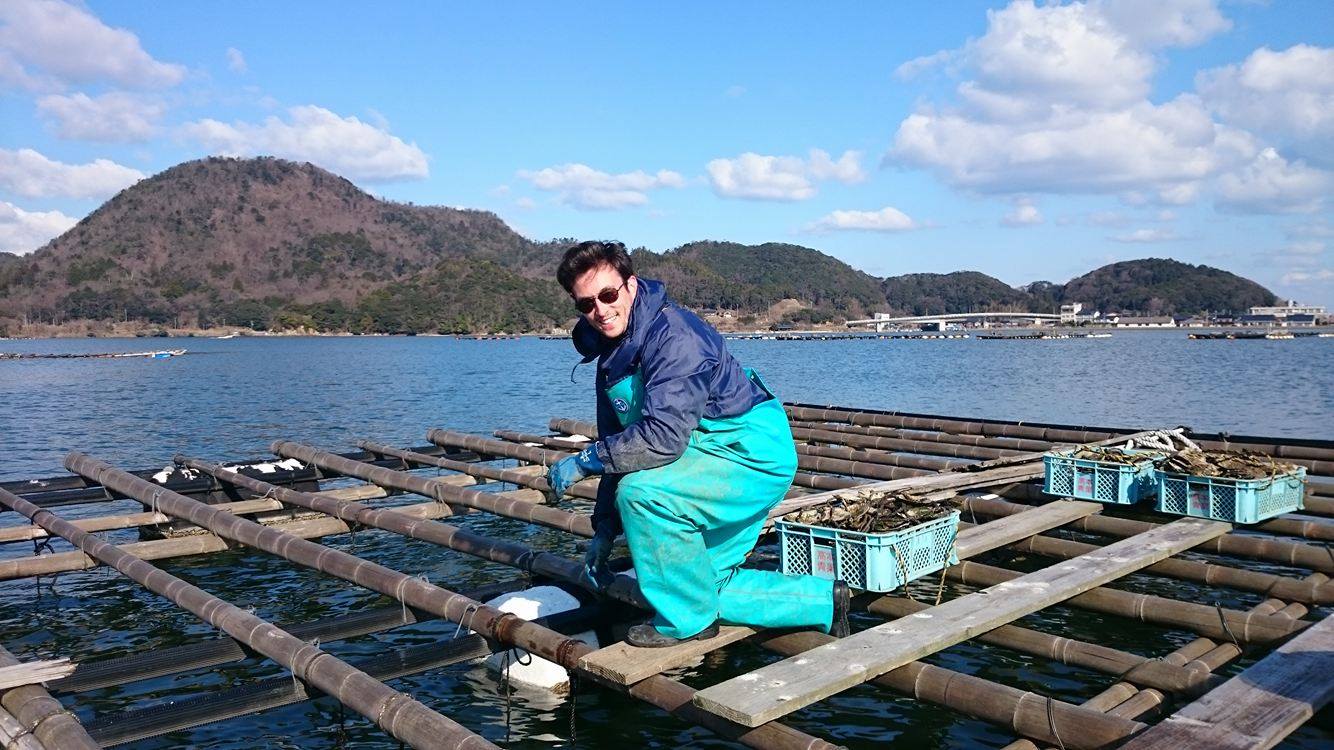
Finding these jobs was fairly easy (more on that in our list of useful links for finding work in Japan, in French). I arrived in Japan just as the ski resorts were opening, and they need a lot of seasonal workers. I applied from France. I got on really well with the manager, and she agreed to recommend me to a hotel group for my second job. As for the farm, my girlfriend found us a spot there.
Money-wise, I did pretty well. As a volunteer, I got free meals and accommodation in exchange for a few hours of work. The hotels also gave me meals and accommodation. One of them took a small amount out of my pay, and so did the farm.
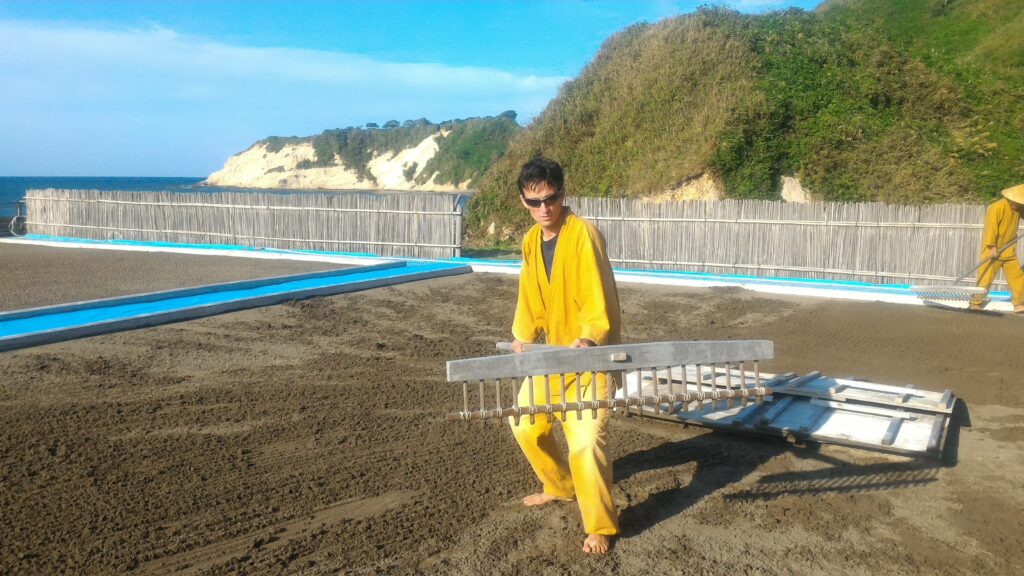
As for getting around, I spent the winters at ski resorts. Then I lived on a small tropical Japanese island for six months, where I got around by bike. At the farm, the farmer let me use a car. Between jobs, I walked, hitchhiked, took the train or rented a car.
All in all, I had everything I needed to make the most of it.
You travelled a lot while you were there. Which regions or experiences stayed with you the most?
That’s an easy one.
The region: the Oki Islands, in the Sea of Japan (see our guide to the holiday side of a Japan working holiday, in French). A little slice of paradise. I wrote a book, Voyages en pays de Wa, about my travels around Japan, and the Oki Islands are the longest chapter. Once I’d finished writing it, I tentatively got in touch with the council on one of the islands to ask whether I could move there to live and work.
The experience: meeting Miho, an elderly Japanese lady who put me up while I was hitchhiking. The place she gave me to stay was surprising, to say the least! To find out how that story ends, feel free to get hold of my book.
What did you enjoy most, or find most surprising, about Japanese culture, society or folklore?
First, the attention to detail. Take business cards: you hand them over with both hands, held between your thumbs and forefingers, turned so the other person can read them straight away. I still do it now.
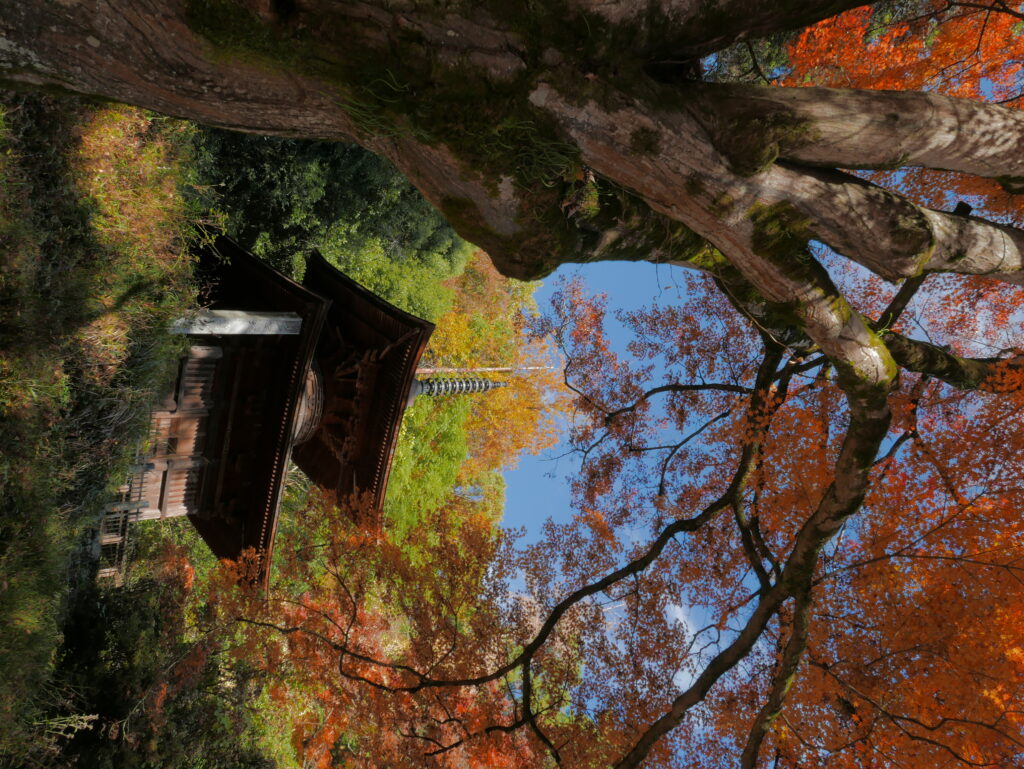
Then, the politeness. The postman, for example, would walk into the lobby of the hotel where I worked and call out “Osewa sama desu”. It’s a way of saying hello at work, and it suggests the postal service is grateful to the hotel for the trust and working relationship between them.
Lastly, the folklore about ogres really stayed with me, and my book actually retells some of their legends.
What challenges or unusual situations did you come across while you were there?
Japanese TV game shows! In one of them, a team of men had to take turns climbing a ramp. At the top, a woman was taking a shower, hidden behind a wall of tiles.
Each man had a ball, and the aim was to get as close as possible to the top of the ramp before throwing it. Whenever a ball hit a tile, the tile fell, revealing part of the young woman’s body. Needless to say, the goal was to knock down the whole wall.
It wasn’t easy, though: the ramp was covered in soap, and the slightest slip sent you into a pool of water so hot that anyone who fell in struggled to climb out, red as a lobster.
What practical advice would you give future working holiday makers heading to Japan?
Japanese people are very friendly, so don’t be shy about approaching them.
Finally, what are your plans for the future?
I’m hoping to share my three years in Japan, which I’ll never forget, through my book, Voyages en pays de Wa. De mes itinérances japonaises.


0 comments
{{like.username}}
Loading...
Load more