













Pamela’s story was first published in French in December 2024.
A New Zealand working holiday is best known for vanlife and how easy it is to live a fairly nomadic life. In my 5 years in the country, I was lucky enough to drive New Zealand’s incredible roads and also to settle down in several places, two of them for longer stretches: Motueka (in French) and Queenstown.
Lots of people know Queenstown (at least by name), but Motueka is less well known among backpackers. Even so, plenty of working holiday makers end up there, because there’s plenty of work in summer (tourism, hospitality, horticulture, vineyards) and because it’s the gateway to Abel Tasman National Park (in French).
So how did life compare in these two very different towns?
Motueka: a working holiday in the countryside

The small town of Motueka is at the top of the South Island. It covers just over 12 km² and has about 8,300 people. Motueka sits on Tasman Bay (in French), and its valley is surrounded by the Richmond Ranges. It’s also less than 20 km from the dreamy beaches of Abel Tasman National Park (in French) and an hour from Golden Bay. And if you need a city fix, Nelson, the region’s biggest city, is barely 45 minutes from Motueka, airport included.
So, small as it is, Motueka is pretty central. And as you’ll see below, a town doesn’t need to be the adventure capital of the world to give you a life full of things to do.
Work
Because Motueka is right on the doorstep of Abel Tasman National Park, I was lucky enough to work at Abel Tasman AquaTaxi and the Abel Tasman Centre for about 4 years. I mostly worked in summer and then travelled in winter, around New Zealand or overseas. The job let me explore one of the most beautiful parts of the country and get to know it like the back of my hand. It was a real privilege. On top of that, I met some amazing people there, who became a bit like my Kiwi family.
Because of its location, Motueka and the surrounding area are full of jobs in tourism and hospitality. You’ll find lots of cafés, restaurants, hostels, campsites, and kayak and water taxi companies that are always looking for seasonal staff in summer.
Besides tourism, Motueka’s economy runs on horticulture. The town is in the middle of a rich, fertile region, so it’s easy to find work almost all year round: kiwifruit, apples, pears, blueberries, raspberries, hops and more all grow there. I picked blueberries for 6 months myself, packed kiwifruit for 2 months and repacked kiwifruit for another 2.
As for pay, lots of people say you pay a “sunshine tax” in Motueka. It’s a very popular area, so wages aren’t very high, even for jobs with a bit more responsibility.
Accommodation
Motueka gets lots of working holiday makers and seasonal workers, so there’s a good range of accommodation: studios, flatshares, hostels (or “backpackers”, as New Zealanders call them), campsites and vanlife. In 4 years in Motueka, I got to try all of them.
When I arrived in Motueka, I lived in a hostel for a year and a half (2 stays of 8 months). It was perfect at the start, because I met other working holiday makers from all over the world. I was lucky to have a private room, so I could socialise with the other people at the hostel and still have a place of my own.
After that, I moved into a shared flat. Generally speaking, it’s easy to find a room with other seasonal workers (New Zealanders or foreigners), especially through Facebook and Trade Me. In my case, it didn’t work out very well.
After my second stint at the hostel I mentioned above, I decided to rent a studio. By that point in my time in New Zealand, I’d settled into a nice routine as a seasonal worker in Abel Tasman. Between the road trips, the hostels and work, I wanted to feel at home somewhere. I loved living in a studio and, after so many years of moving around, I especially loved having my own little place to decorate.
Sadly, it didn’t last, because the landlady decided the studio was going to be her new walk-in wardrobe. So I had to move into my car in a hurry. It was the middle of summer, affordable studios were hard to find, and after several years in hostels I didn’t really feel like going back to hostel life at that stage. That year was also a particularly busy tourist season with long working days, so it was easier to stay in the car park at work, where we had showers and a kitchen. Money-wise, it was by far the cheapest way to live.
Daily life and the locals
Most people in Motueka are New Zealanders, often born in the area, though some have moved here from elsewhere for this little corner of paradise. There are also lots of people from Tonga, Samoa, Vanuatu and Fiji, as well as a backpacker crowd that changes every season. Life in Motueka revolves around the tourist and harvest seasons, so many young locals are seasonal workers themselves and leave at the end of summer to work elsewhere in New Zealand or around the world.
Motueka is a small town, so it doesn’t take long to feel at home. The locals are welcoming, and before long the barista at your favourite café or the person on the supermarket checkout will know your face. Even if you’re just passing through, you can quickly become part of local life while meeting working holiday makers from all over the world, and that’s what makes Motueka so special.
I always describe my years in Motueka as my real Kiwi life. I met lots of travellers, but most of the friends I made were locals. Those were the years when I learnt a lot about Kiwi culture and really came to understand it. Living in New Zealand is one thing. Living with New Zealanders is another.
That’s why I often tell working holiday makers to spend at least some of their working holiday in a small town. It’s a real chance to immerse yourself in Kiwi culture, and it’s a lovely culture.
Nature and town life
As I said above, Motueka is in the heart of a region with stunning scenery. There’s Abel Tasman National Park, of course, but also the Richmond Ranges, Nelson Lakes, Kahurangi National Park and the beautiful Golden Bay area. Hikes, beaches, waterfalls, mountains, springs, sunrises… whatever you’re into, you’ll find it.
On the other hand, don’t go to Motueka if you want a lively town. It can feel a bit sleepy if you like a buzz. Apart from a few bars, there isn’t much going on, especially in winter, when the town seems to hibernate! On Sundays a nice market pops up in the town centre, but that’s about it.
Queenstown: a working holiday in town

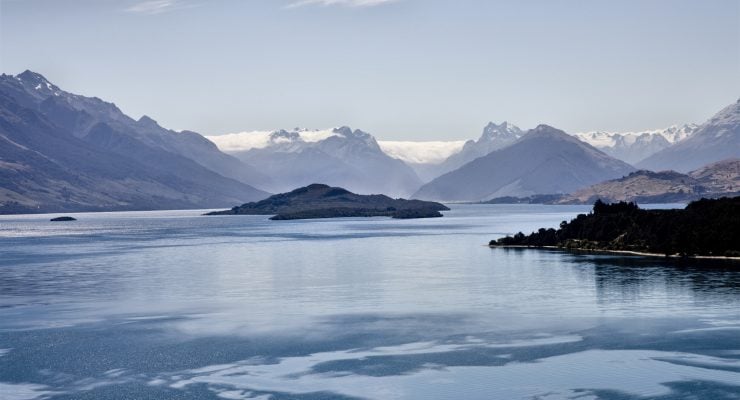
Queenstown is a resort town tucked into the mountains of the South Island. It covers about 86 km² and has almost 28,000 people. Surrounded by the Remarkables and on the shores of Lake Wakatipu, it’s a must for anyone who loves hiking and winter sports. It’s also the adventure capital of the world, with endless adventure activities (in French). Jet boats, bungy jumping, canyon swings, paragliding: you’ll always find something fun to do (or a way to push your limits).
Queenstown is sometimes a victim of its own popularity, and people either love it or hate it. Some feel the town is losing its charm because of all the tourist attractions. Either way, I’d really encourage you to make up your own mind!
Work
Queenstown gets more than 350,000 visitors a year. Summer or winter, there’s always something going on. So you won’t struggle to find work in tourism, hospitality and hotels, and also in construction and traffic control. Queenstown also has lots of temp agencies (in French). They can help you find long-term jobs (although for those it’s better to go straight to employers) as well as one-off jobs to top up your main job, if you have one. Queenstown hosts all sorts of festivals, so these temp agencies can be a way to get work at some of them. You also get to try lots of different roles, which can help when you apply for work later on, in New Zealand or elsewhere.
During my 5 months in Queenstown, I worked at weddings (setting up the reception room, serving wine and canapés), did recycling at Rhythm & Alps (in French), the biggest festival in the South Island, worked in a food truck, took down festival stages, helped prepare meals for a festival, cleaned Airbnbs, and lots more.
Wages are generally higher than elsewhere in New Zealand, in line with the cost of living, which is also higher.
Accommodation
Finding a job in Queenstown is easy, but finding somewhere to live is the hard part if you decide to settle there. The town has had a fairly severe housing crisis for several years. Rooms in flatshares aren’t easy to find and prices can be scary, well above other New Zealand towns.
Daily life and the locals
Queenstown is always on the move. Between tourists and seasonal workers, the population can be completely different from one year to the next. So when you’re just passing through, it can sometimes be hard to feel like a local. Locals will often take you for a tourist, and they’re used to seeing working holiday makers come and go. That doesn’t mean you won’t make local or international friends. It might just take a bit more patience, or joining a sports club or moving into a shared flat.
Queenstown is a very international town. I met very few New Zealanders there and mostly expats from all over the world.
As I was living in a van and working remotely, I met very few people in Queenstown. I got friendly with the barista and a few other remote workers at the café I often worked from, but without flatmates I found it hard to build a circle of friends. Even so, I loved living in Queenstown. It felt like a fresh start in my life in New Zealand. I loved being somewhere with new scenery, in a town with a bit more to offer.
Nature and town life
Queenstown is a really nice town. Its town centre is very cute, especially compared with other New Zealand towns. And although it’s small, there’s lots going on. You’ll find bars, shops, street performers… There’s also Fergburger (the best burger in New Zealand), Patagonia (the best ice cream), The Bakery (amazing pies, the best in my opinion), and Ma Boulangerie (a French bakery with very reasonable prices). And don’t miss a ride up the Queenstown gondola for the views. If you live there, there’s also a very good-value locals’ pass. To get it, you just need to show an employment contract or a tenancy agreement.
As for nature, you’ll be right at the foot of the mountains, which is pretty incredible. There are some beautiful hikes around Queenstown (in French), especially in the Remarkables and near Glenorchy. The Routeburn Track is close by too, and the town is the natural base if you’re heading to Milford Sound.
Conclusion
As you can tell, my two experiences in Motueka and Queenstown were very different. Living in Queenstown felt like a second working holiday, a whole new adventure. It’s also funny to think that I lived like an expat in a village and like a backpacker in a town full of expats! I loved them both, and each has its pros and cons. I couldn’t choose between them, but if I could give you one piece of advice, it would be to try living in a few different places. I think small-town life is lovely because it makes you feel a bit more Kiwi, but a town full of expats is great too, because you meet people from all walks of life.
What about you? Which town did you fall for on your working holiday?



0 comments
{{like.username}}
Loading...
Load more