












If you’ve never taken a flight before, air travel can be intimidating.
Getting ready for the trip, navigating the airport, and meeting airline and security requirements takes a bit of practice.
This article will walk you through what it’s like from A to Z, from packing your bags to landing at your destination.
- France and Canada (both directions) with Air Canada
- France and Australia (both directions) via Ulysse
- France and New Zealand (both directions) via Ulysse
Contents
Preparation
1. Check your baggage allowance
Make sure you know how many bags your airline and ticket class allow you to bring. This is important because if you exceed the allowance (by number, weight, or volume), you will be asked to pay extra.
There are three types of bags, from smallest to biggest:
- Personal item. All airlines and all ticket types allow you to bring a small personal aboard the aircraft. This is typically a purse, duffel bag, or backpack – basically whatever that can fit underneath the seat in front of you. Note that duty-free purchases at the airport do not count toward this allowance, as they are not considered personal items.
- Carry-ons. Standard economy tickets generally allow you to bring a carry-on suitcase into the cabin as well. They must fit into the overhead compartment of the cabin. The weight and size limits vary by airline and itinerary, so make sure that your suitcase isn’t too big or packed too heavy. Budget airlines and economy basic tickets usually do NOT include allowance for a carry-on.
- Checked baggage. These are the largest suitcases or bags that go in the cargo of the plane. If your ticket includes allowance, just make sure to not exceed the weight limit, which is typically 23kg.
You should label all of your bags, checked or otherwise, with your name and contact information, in case they get lost in transit.
2. Don’t pack prohibited items
Do not pack the following items in your carry-on bag or personal item because they are not allowed in the cabin:
- Sharp objects such as knives (Swiss army knife included), scissors, and razors. They must be put into your checked bag.
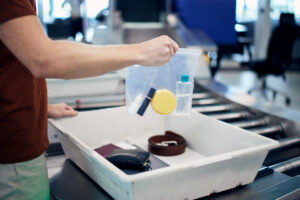
- Liquids are limited to containers of 100 ml each up to 1 litre in total, and must be placed in a clear plastic bag. Larger liquids must be put into your checked bag.
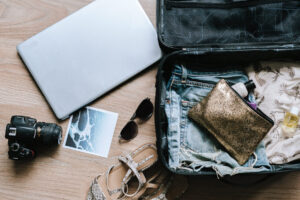
So, what should you pack in your carry-on? Basically, anything fragile and/or important such as electronics, ID and travel documents, medication etc., things of value that you want to keep close to you or items that you may need during your flight.
Keep your liquids and electronics accessible because you will be asked to place them in a separate bin when going through security screening.
3. Check in to your flight
Checking in for your flight is mandatory. There are two ways to do so:
- Online. You should receive an email from your airline 48 to 24 hours before the flight with instructions on how to do so. You may be asked to indicate the number of bags, your meal preference, and choice of seat.
- In-person. If for whatever reason you can’t check in online, you can check in at the airline counter in the airport the day of your flight before heading to the security checkpoint.
At the end of the process, you will get a boarding pass with your flight and seat number, the boarding and departure time, maybe the gate number and a QR code.
If you want, you can print your boarding pass, but at a minimum, save your boarding pass on your phone for easy offline access.

Day of travel
1. Dress appropriately
While you should obviously wear whatever you’re comfortable in, we advise that you:
- Bring at least a light jacket or long sleeve shirt. This is because even if it might be warm outside, the inside of the aircraft is air conditioned and so can be quite chilly.
- Wear shoes that can be easily removed at security checkpoints.
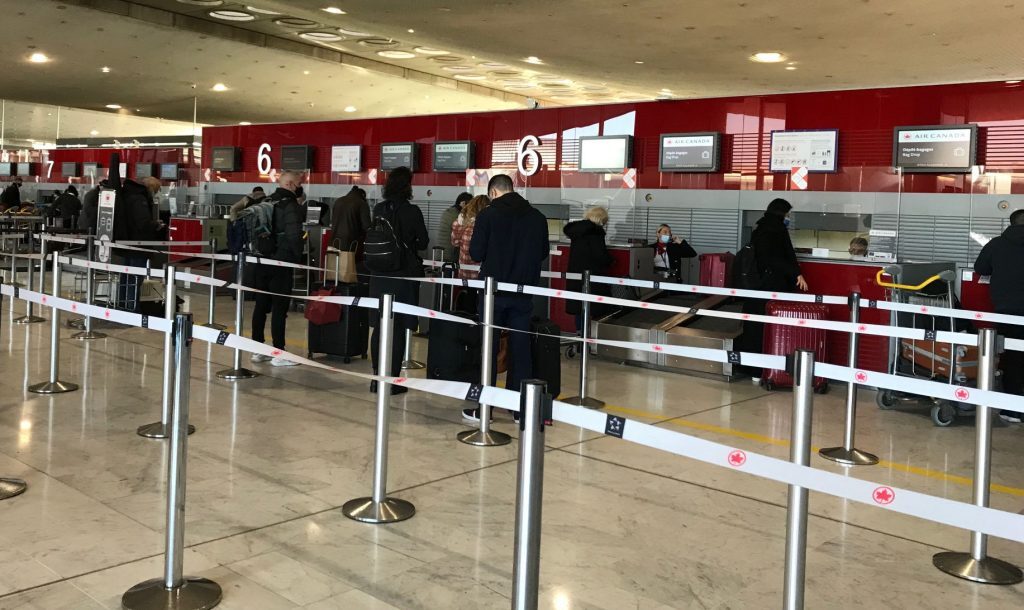
- If you have checked bags to drop off or still need to check in to your flight, then head to the airline counter. Your luggage will be weighed, tagged and you will be issued a paper boarding pass. Then you will head to the security checkpoint.
- If you already have your boarding pass and don’t have any bags to check, you can head straight to the security checkpoint.
- Show your boarding pass
- Take out your laptop, tablet, and liquids (max 100 mL each)
- Remove your shoes, belt, and jacket
- Empty your pockets
2. Arrive at the airport early
When leaving home, make sure to take traffic into account. Airlines typically recommend arriving three hours before an international flight. It’s better to be early at the gate and wait around than to run through the airport or even miss your flight.
Drive to the right terminal for your flight. This should be indicated on your boarding pass. Otherwise, type your flight number into Google and you’ll see the terminal in the search results too.

3. Drop off checked bags
Once you’ve arrived at the right terminal, there are two possible next steps:
This is when you’ll have to say goodbye to friends and family because only boarding pass holders are allowed at the security checkpoint.
4. Go through security
The airport security checkpoint can be the most stressful part of the journey for first-time travellers. Don’t worry about it too much, mistakes happen and the airport staff are understanding.
Make sure to empty your water bottle before joining the queue.
You will be told what you need to do, but in general you should be prepared to:
Once it’s your turn, walk through the metal detector.
The bins with your personal items should be waiting for you on the other side of the metal detector. Don’t forget to grab everything.
Next, find your boarding gate.
Boarding
If your boarding gate number isn’t indicated on your boarding pass, then you can find it by checking one of the many departure screens in the airport.
Boarding usually starts about one hour before departure time. Pay attention to public announcements as well just in case your gate changes or your name is called for whatever reason.
Most airlines have a boarding policy with different zones. Yours will be printed on your boarding pass. Passengers with the highest priority will be called to board first.
When it’s your turn, show your boarding pass and passport.
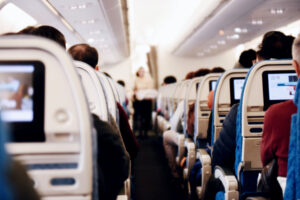
Find your seat, stow your carry-on in the overhead bin or under the front seat, and buckle up. Time to enjoy the flight!
During the flight
1. Food and beverage
A hot meal and a snack are usually served on all long-haul flights. You will be offered water, soft drinks and maybe a glass of wine. Food and drinks are complimentary in this case.
On shorter flights or budget airlines, there’s a paid menu (usually simple snacks). Pack your own food to avoid disappointingly high prices; it’s perfectly okay to bring a sandwich, cookies, crackers or chips, etc. It won’t get flagged at security.
Note that some countries (such as Australia) don’t allow you to take certain foods through customs, including many fresh fruits and airplane food. Eat during the flight or throw it away when you arrive.
2. Sleep
If you’re determined to get some sleep, bring earplugs, an eye mask, and a neck pillow. Lights should be dimmed at certain periods during the flight.
Some airlines offer a complimentary comfort kit including a pillow and a blanket, but not all of them.
3. Entertainment
Most international airlines have a built-in touch screen in front of you with preloaded movies, shows, music, games etc. Earbuds are usually provided for free.
Alternatively, bring a book or an e-reader, or watch your own movies on a tablet or a phone. Remember to download anything you need before the flight. Or you could always pay for in-flight wifi.
After landing
1. Catching a connecting flight
You should budget a minimum of two hours between connecting flights. Deplaning takes time, and so does finding your new gate.
You should have a different boarding pass for each flight. If not, go to the airline service counter.
Check if your checked luggage is being delivered straight to your final destination or if you need to pick it up and recheck it.
If you have a stopover or a layover in a different country, check if you need a visa or travel authorization.
2. Customs and immigration
Your final quest will be to go through customs and immigration. Follow the signs and keep your passport and supporting documents handy.
Once it’s done, you can pick up your checked luggage and leave the airport.
Welcome to your destination!







0 comments
{{like.username}}
Loading...
Load more